

In the recent court case Safdieh v. Commissioner (2026), the U.S. Court of Appeals for the Second Circuit held that the IRS may assess and collect penalties directly for failing to file certain foreign business information returns under section 6038, reversing the 2023 determination that the IRS must first sue a taxpayer to collect penalties.
The Second Circuit said the IRS can use its normal administrative collection methods without first going to court. These methods include issuing a notice and demand for payment and, if unpaid, proceeding with liens or levies.
How Safdieh Builds on Farhy
The Safdieh ruling follows the D.C. Circuit’s 2024 reversal of Farhy v. Commissioner, which provided a temporary defense for taxpayers, suggesting the IRS lacked authority to assess 6038 penalties. The overturning of Farhy v. Commissioner holds that the IRS has the authority to assess these penalties administratively.
While the IRS generally maintains its legal positions nationwide, the Golsen rule previously required the Tax Court to follow the Farhy reversal only for taxpayers within the D.C. Circuit’s jurisdiction. For taxpayers in other regions, there was a lingering question of whether the Tax Court would apply its original, taxpayer-friendly logic. The Safdieh decision effectively narrows this gap, as the Second Circuit has now aligned with the D.C. Circuit. This creates a powerful appellate consensus that these penalties are “assessable penalties” under Section 6201(a).
What This Means for Owners of Foreign Businesses
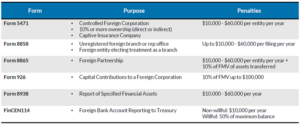
If you are a U.S. taxpayer and own or control certain foreign corporations or foreign partnerships, you are often required to file information returns, Form 5471 or Form 8865, with the IRS. These forms relate to the disclosure of activity in a foreign business, which may or may not result in additional U.S. taxation.
Under Section 6038(b), the initial penalty for failure to file is $10,000 per annual accounting period. If the failure continues for more than 90 days after the IRS mails a notice of the failure to the taxpayer, additional “continuation penalties” of $10,000 are charged for each 30-day period, up to a maximum of $50,000.
These penalties may also be layered with penalties under other regulations, resulting in multiple missed disclosures and penalties related to ownership in the same entity. Penalties may also increase in some cases where the lack of disclosure was “willful.”
Why Timely Review and Disclosure Matters
The Circuit Courts’ affirmation of the IRS’s administrative authority to issue penalties may encourage the IRS to take a firmer approach to foreign reporting penalties. As a taxpayer, you still retain the right to argue reasonable cause to abate penalties through Collection hearings or voluntary disclosures.
However, there are ways to proactively avoid significant penalties. You should take steps to identify gaps in foreign corporation reporting as soon as possible. Certain voluntary disclosure programs may allow for reduced or waived penalties, provided you disclose before the IRS initiates an audit or issues a request for information.
If you have questions regarding your foreign reporting obligations or wish to discuss a disclosure strategy, reach out to your RKL Tax Advisor or a member of the RKL International Tax Team for assistance.